Thermal Management of LEDs: Package to System
Mehmet Arik, Charles Becker, Stanton Weaver, and James Petroskic
Abstract:Light emitting diodes, LEDs, historically have been used for indicators and produced low amounts of heat.
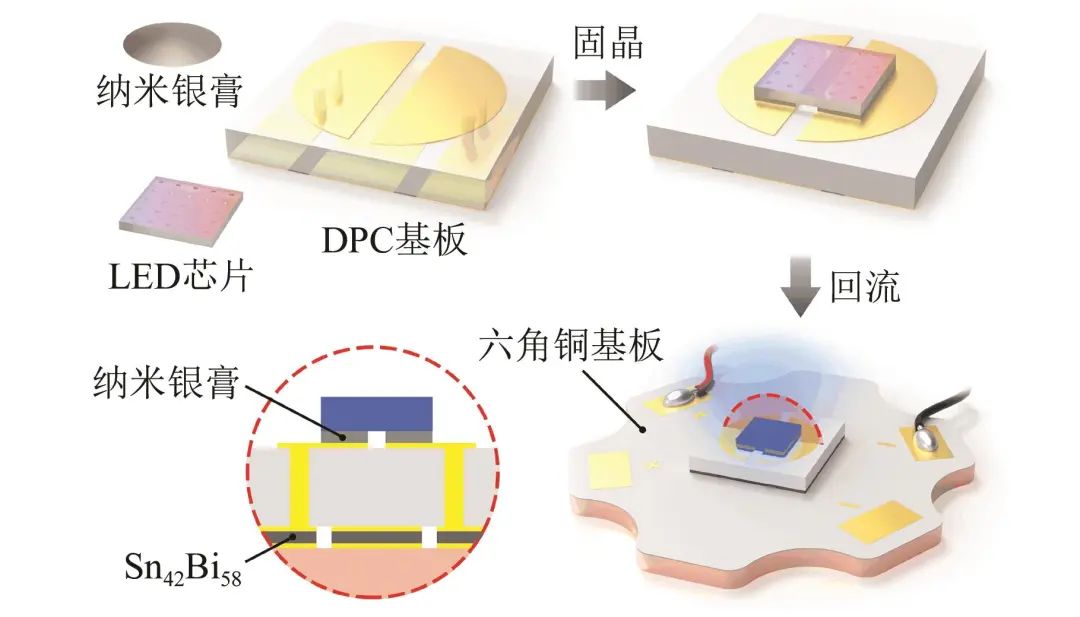
The introduction of high brightness LEDs with white light and monochromatic colors have led to a movement towards general illumination. The increased lectrical currents used to drive the LEDs have focused more attention on the thermal paths in the developments of LED power packaging. The luminous efficiency of LEDs is soon expected to reach over 80 lumens/W, this is approximately 6 times the efficiency of a conventional incandescent tungsten bulb. Thermal management for the solid-state lighting applications is a key design parameter for both package and system level. Package and system level thermal management is discussed in separate sections. Effect of chip packages on junction to board thermal resistance was compared for both SiC and Sapphire chips. The higher thermal conductivity of the SiC chip provided about 2 times better thermal performance than the latter, while the under-filled Sapphire chip package can only catch the SiC chip performance. Later, system level thermal management was studied based on established numerical models for a conceptual solid-state lighting system. A conceptual LED illumination system was chosen and CFD models were created to determine the availability and limitations of passive air-cooling.
Keywords: Solid-state lighting, LEDs, Thermal management, CFD, Convection.
Introduction
The introduction of the first practical visible solid state LED occurred in 1962, and was invented by Nick Holonyak of the General Electric Company [Holonyak, 1992]. It was discovered that the wavelength of an infrared GaAs diode could be shifted to the visible spectrum by the introduction of phosphate dopants. The introduction of a compatible large band gap material raises the overall band gap thus shifting emission into the visible spectrum.
Thermal Management of Solid State Lighting Devices
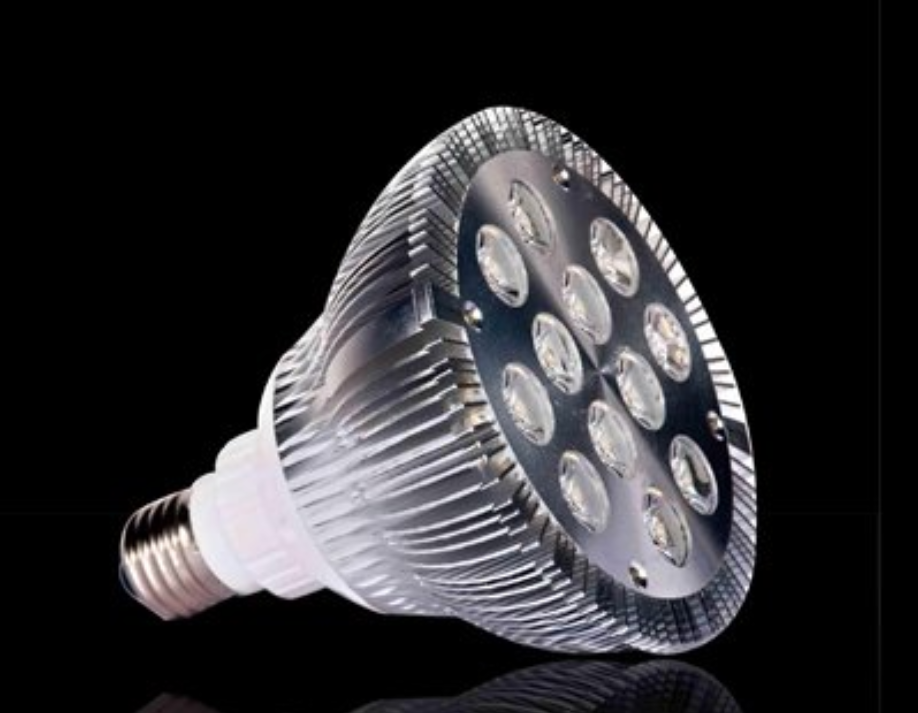
Although it is a fairly new market, LEDs as an alternative to conventional lighting products, brings some demanding thermal challenges. A typical LED lighting system is faced with the issues of decreasing the thermal resistance from junction to the substrate, and the availability of the orientation independent, cost-effective system level thermal solutions. The efficiency of solid-state lighting devices strongly depends on the junction temperature as given in Figure 1. A strong argument by solid state lighting advocates is the long life of the LEDs, which results in cheaper and more reliable illumination systems. Current LEDs are more sensitive to temperature than standard solid-state electronic components so that more attention must be paid to the thermal architecture.
....
Summary and Conclusions
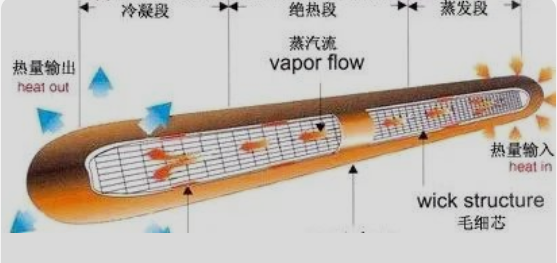
Historical development of LEDs and future perspectives for replacing conventional, energy-inefficient, high lumen, lighting systems were discussed. Thermal management is a key technology for creating reliable, high lumen, LED systems. Package level and system level thermal management constructs the overall thermal architecture. A successful design should have low thermal resistance between the junction and the heat sink base,which relies on conduction heat transfer. This is followed by system level thermal management, which includes heat sinks and extended surfaces. Active or preferably passive cooling with air will be the predominant choice for LED based illumination systems. Although it is expected that a lot of new thermal challenges will arise in the development solid state lighting systems, conventional semiconductor thermal management technology will enable many techniques to be easily-transferred to SSL. However cost, longer life expectations, and tight thermal envelope constraints will drive custom thermal solutions for LED based lighting systems.
Acknowledgements
Authors would like to acknowledge the financial support for this work provided by GELcore, Cleveland, and GE Global Research Center, Niskayuna.
熱設(shè)計論文下載:Thermal-management-of-LEDs-package-to-system.pdf
標(biāo)簽: 點擊: 評論: